What Makes Galápagos Nature Excursions So Extraordinary
The Galápagos Islands have long held a reputation as one of the most remarkable places on Earth for experiencing wildlife and untouched landscapes up close. For travelers who want more than a brief stop at a popular beach, the idea of dedicated galápagos nature excursions opens a way to see this archipelago in a more deliberate, focused manner. Rather than hopping from one crowded tourist site to another, these trips allow you to spend real time observing animals in their natural habitats, walking across volcanic terrain that has changed little over centuries, and learning from naturalist guides who know the islands intimately.
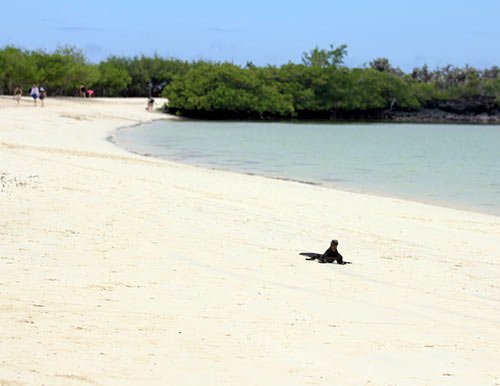
What sets these journeys apart is the sheer density of life that seems indifferent to your presence. Marine iguanas sun themselves on black lava rocks just a few feet from the trail. Blue-footed boobies perform their courtship dance without glancing up at the small group of visitors watching quietly. Galápagos penguins dart through crystal-clear water, often close enough to see the individual markings on their heads. This is not a zoo, and the animals are not tame; they simply have not learned to fear humans, which makes every encounter feel like a privilege rather than a performance.
Choosing the Right Approach for Your Trip
There are several ways to experience the islands, but the most immersive usually involve spending a week or more moving between different islands while sleeping aboard a comfortable vessel. The Natural Paradise yacht, for instance, accommodates just sixteen passengers, which keeps groups small and allows for a more flexible schedule. Smaller boats can pull into coves that larger ships must skip, and they can adjust the day's plan when a pod of dolphins appears or when the wind shifts and makes a particular landing site safer or more sheltered.
When you plan galápagos nature excursions, the choice of itinerary matters a great deal. The archipelago covers a vast area, and each island presents a different combination of geology, vegetation, and resident species. A well-designed route typically includes visits to both the central and western islands, because the western islands like Fernandina Island and Isabela Island receive cooler, nutrient-rich currents that support different marine life than the warmer eastern side. The western islands also tend to have more active volcanic features, such as the lava tubes and recent flows on Fernandina, where you can see how life slowly colonizes raw rock.
Key Islands and Their Highlights
While every island in the Galápagos has something to offer, a handful stand out for the density and variety of their wildlife, as well as the quality of the walking and snorkeling. A typical week-long cruise might include stops at the following locations, each chosen to show a different facet of the ecosystem.

- Santa Cruz Island is home to the Charles Darwin Research Station, where scientists work on conservation programs including the captive breeding of giant tortoises. It is also a good place to see tortoises in the wild, as they graze on vegetation in the highlands.
- North Seymour Island hosts one of the largest colonies of frigatebirds and blue-footed boobies in the archipelago. The flat terrain makes for easy walking, and the birds are so accustomed to people that you can observe nesting behavior from just a few meters away.
- Bartolomé Island features a short but steep hike to a viewpoint that overlooks the entire central archipelago. The trail passes through a landscape of volcanic cones and spatter formations, with Galápagos penguins often seen resting on rocks near the shore.
- Genovesa Island, also known as Tower Island, is famous for its birdlife. The eroded volcanic caldera creates a natural amphitheater where red-footed boobies, swallow-tailed gulls, and storm petrels nest in large numbers. The snorkeling along the outer cliffs is excellent, with Galápagos penguins and marine iguanas often swimming nearby.
- Española Island is the primary nesting site for waved albatrosses, and its southern coast at Punta Suárez offers a chance to see these large seabirds up close during their breeding season. The island also has a healthy population of marine iguanas that display bright red, green, and orange coloration during the mating period.
Snorkeling and Underwater Encounters
No visit to the Galápagos feels complete without spending time in the water. The same currents that bring nutrients to the surface also attract a remarkable diversity of fish, rays, sharks, and sea turtles. Snorkeling from a small boat or directly off a beach provides a different perspective on the marine environment. You might float alongside a sea lion that seems curious about your mask, watch a marine iguana feed on algae beneath the surface, or see a Galápagos penguin rocket past at close range.
One of the best snorkeling spots is Kicker Rock, a dramatic tuff formation off the coast of San Cristóbal. The channel between the two rock towers is home to schools of Galápagos sharks, hammerheads, and sea turtles. The current can be strong here, so it is best suited to confident swimmers. Another excellent site is Punta Cormorant on Floreana Island, where a sheltered bay offers calm water, clear visibility, and a high chance of encountering sea turtles and rays. At Tagus Cove on Isabela Island, you can snorkel along a shoreline that has been shaped by volcanic eruptions, with underwater ledges and caves that harbor large fish and occasional white-tip reef sharks.
The Role of Guides and Interpretation
One aspect that often surprises first-time visitors is how much the experience depends on the quality of the naturalist guides. All tours in the Galápagos are required to travel with licensed guides, but their knowledge and enthusiasm vary widely. A good guide does not simply point out animals; they explain the evolutionary history, the ecological relationships, and the conservation challenges that shape what you see. They also manage the group's movements to minimize disturbance, ensuring that your presence does not stress the wildlife or damage the fragile vegetation.
When you book galápagos nature excursions through a small-ship operator like the Natural Paradise yacht, the guide-to-guest ratio tends to be lower, which allows for more personalized explanations and the flexibility to linger at a site when something interesting happens. A group of eight or ten people can spread out along a trail without overwhelming a nesting colony. The guide can answer individual questions without repeating the same facts to a large crowd. This intimacy is one of the main reasons travelers choose a smaller vessel over a larger cruise ship.
Practical Considerations for First-Time Visitors
Getting to the Galápagos requires flying into either Baltra or San Cristóbal, and from there you transfer to your boat. Most cruises depart from Baltra, which is a short bus ride from the airport. The weather in the Galápagos is mild year-round, but there are two distinct seasons. The warm, wet season runs from December through May, with calmer seas and air temperatures that can reach the high 80s Fahrenheit. The cool, dry season from June through November brings stronger winds, rougher seas, and the famous garúa fog that often blankets the southern islands. Both seasons have advantages. The warm season offers better conditions for snorkeling and seeing marine iguanas and sea lions, while the cool season brings more abundant plankton, which attracts larger schools of fish and more seabirds.
What to pack is a common concern. Lightweight, quick-drying clothing is essential because you will be in and out of a dinghy several times a day. A good pair of water shoes or reef walkers helps when landing on rocky shores. Sun protection is critical; the equatorial sun is intense, and the reflection off the water can fool even careful sunscreen users. A waterproof camera or a good phone case is worth the investment, because the photo opportunities are relentless.
Conservation and Responsible Travel
The Galápagos National Park enforces strict rules to protect the ecosystem. You must stay on marked trails, keep at least two meters from all wildlife, and never feed or touch any animal. These rules are not arbitrary; they preserve the very qualities that make the islands special. Even a small disturbance can disrupt nesting success or alter foraging behavior. Responsible travelers respect these guidelines and also choose operators who follow them rigorously. The Natural Paradise yacht, for example, includes conservation briefings as part of its daily routine, and its small group size reduces the cumulative impact on each landing site.
Beyond the national park rules, there is a broader question of how tourism affects the islands. The number of visitors has grown steadily over the past two decades, and the infrastructure on the main islands of Santa Cruz, San Cristóbal, and Baltra has expanded to accommodate them. Choosing a high-quality, low-impact operator helps ensure that your visit contributes to the local economy without adding to the pressure on the environment. Many travelers find that spending more per day for a smaller, more responsible experience is ultimately more rewarding than trying to see the islands on a budget that forces larger groups and quicker stops.

In the end, what makes these trips unforgettable is not any single animal or landscape, but the cumulative effect of days spent in a place where nature still operates on its own terms. The marine iguanas sneezing salt from their nostrils, the giant tortoises slowly crossing a dusty path, the blue-footed boobies dancing with exaggerated steps, these moments add up to an experience that changes how you think about wildness and conservation. And that is why investing in well-planned galápagos nature excursions, with a thoughtful itinerary and a knowledgeable guide, is worth every bit of effort it takes to get there.